Daily Digest — 2026-09-21
Jump to a section
Signals
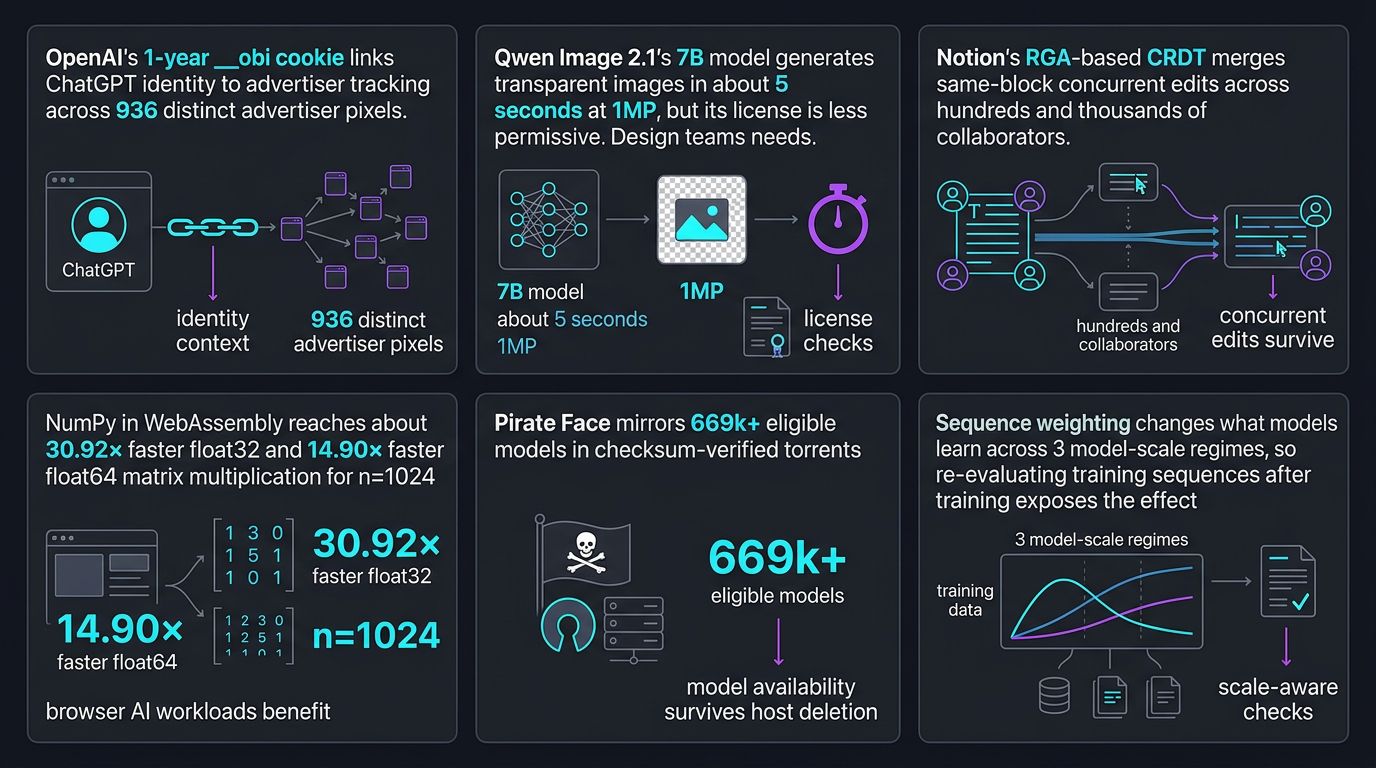
- OpenAI’s 1-year __obi cookie links ChatGPT identity to advertiser tracking across 936 distinct advertiser pixels. Users lose identity context.
- Qwen Image 2.1’s 7B model generates transparent images in about 5 seconds at 1MP, but its license is less permissive. Design teams need license checks.
- Notion’s RGA-based CRDT merges same-block concurrent edits across hundreds and thousands of collaborators instead of discarding them. Concurrent edits survive.
- NumPy in WebAssembly reaches about 30.92× faster float32 and 14.90× faster float64 matrix multiplication for n=1024. Browser AI workloads benefit.
- Pirate Face mirrors 669k+ eligible models in checksum-verified torrents. Model availability survives host deletion.
- Sequence weighting changes what models learn across 3 model-scale regimes, so re-evaluating training sequences after training exposes the effect. Eval teams need scale-aware checks.
Themes
Design systems, interfaces, and UX
The common thread is governance: when UX choices become explicit rules, teams can test artifacts before debating taste and challenge decades-old desktop assumptions.
- Design Systems Are a Collection of Decisions

Design systems with over 2,000 subscribers treat components as decision records, not decoration; test artifacts against tokens, variants, states, and accessibility before asking an LLM to judge them. - Are we really going to use the same Desktop UX forever?

Linux desktop UX 20 years old can still change selection, truncation, and window raising; fresh UX research may unstick open source from copied Windows and Mac patterns.
AI model behavior, trust, and infrastructure
Across these posts, the common risk is not that AI systems are opaque, but that their behavior shifts under scale, licensing, or surface fluency. The infrastructure question is whether we can build evaluation and deployment practices that detect those shifts before users mistake polish for reliability.
- A study of sequence weighting at scale
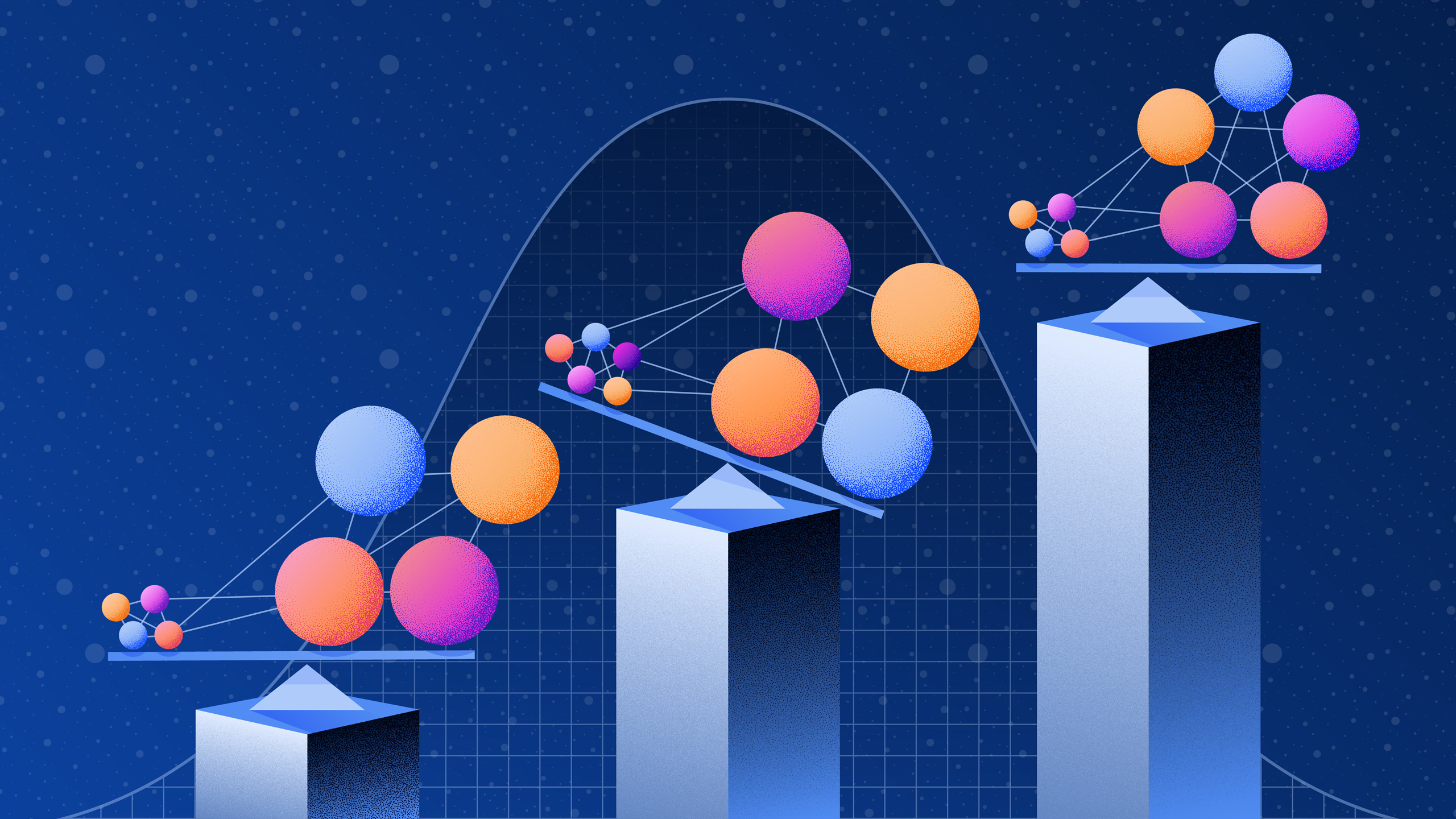
A study of sequence weighting at scale: 3 model-scale regimes show that weighting no longer behaves the same as models grow. That changes how much we can trust scaling recipes built on smaller models. - Qwen Image 2.1161

Qwen Image 2.1: 7B parameters leap from Qwen-Image 1.0 to a stronger base, while the license is less permissive. Native transparency and multimodal image handling cut extra pipeline pieces, but trust depends on usage rights and prompt tuning. - The LLMentalist Effect (2023)252

The LLMentalist Effect (2023): two possible explanations for why fluent LLMs look intelligent. If users can’t separate eloquence from capability, trust in AI assistants fails.
AI privacy, trust, and digital commons
AI systems are turning attention, identity, and creative work into assets that can be harvested, linked, and re-licensed without consent. The unsettling question is whether privacy rules and open licenses can still shape incentives when the default business model treats public data as a free feedstock.
- AI and the Destruction of the Creative Commons271
Creative Commons, after 40 years of debate and 35 years of openness, faces a license problem: LLM scraping can turn shared work into outputs that do not carry the original terms. That makes openness look like a liability and could push creators back behind paywalls. - ChatGPT now knows what you do on other websites via ad collector365
OpenAI’s __obi cookie, seeded by 16 random bytes, can follow users across websites and expose advertiser-supplied identity signals to ChatGPT-linked systems. With 936 distinct advertiser pixels in the test, the boundary between private chat identity and public web tracking gets uncomfortably porous. - You Know GDPR Is Good Based on Who Hates It
GDPR, now associated with 126 countries, shows how privacy law can shift defaults even when tech commentators hate it. If consent must be freely given and easy to refuse, cookie banners stop being a side issue and become a test of whether platforms respect the digital commons.
Software architecture, collaboration, and tooling
Across these articles, the common thread is architecture by constraint: move messy real-world work behind boundaries, make collaboration mergeable, and keep tooling close to the workflow. The payoff is systems that are easier to test, ship, and maintain as teams and dependencies grow.
- Deterministic Core, Non-Deterministic Shell

Deterministic Core, Non-Deterministic Shell hit 14 years on. Moving I/O and async work out of business logic keeps testing benefits without requiring pure code. - What’s been going on in w64devkit the past year
w64devkit scaled to ~100,000 hosts and ~300 binaries. Code-signed releases and locked artifacts make C++ builds easier to audit. - How Notion handles concurrent editing with CRDTs

Notion’s CRDTs merged hundreds and thousands of collaborators’ edits. Stable IDs and tombstones let same-block changes merge instead of last-write-wins. - Beyond jj: config & tools ecosystem
jj folded three commands into core. Fewer wrappers mean bookmarks, tags, scripts, and fixes stay closer to the VCS workflow. - Lambda MicroEgg

Lambda MicroEgg measured 3 rewrite rules across 5 rounds. Higher-order rewrites are expressive, but matching and apply costs rise. - Samsung is expected to more than double output of its HBM4 and HBM4E DRAM256

Samsung’s HBM4 and HBM4E hit at least 2x output growth. 2.5x glass carrier volume supports 12-layer stacks for larger HBM packages. - An actively maintained and updated Motif fork actually exists
More dirty coding tricks from game developers (2015) supplied no article body. No usable evidence means the promised tricks cannot be verified. - More dirty coding tricks from game developers (2015)
The supplied text cannot support claims about dirty coding tricks because it contains no article body.
Browser, embedded systems, and open hardware
Across browsers and embedded devices, the interesting pattern is that locked appliances are becoming programmable surfaces. When open toolchains pair with local control, performance gains and hardware hacks can turn familiar devices into serious computing platforms.
- The last mile of a long road: faster NumPy in the browser

Browser NumPy, 30.92× faster for float32, puts matrix math much closer to native speed, with 14.90× for float64. The win matters when web apps finally need serious linear algebra without a backend. - Roku launches open-source Roku LT OS for creative programmers

Roku LT OS is open-source for creative programmers, turning a locked entertainment box into a canvas for custom interfaces and experiments. The move matters because living-room hardware can become a platform again. - OpenMote: ESP32 board for a WiiMote shell

$97,763 raised and 717 backers show demand for a reprogrammable WiiMote shell. ESP32-S3 turns it into a local Home Assistant hub, Bluetooth LE gamepad, and infrared remote for home automation and media.
Security and long-lived systems
Security for long-lived systems is less about heroic patches than about assumptions that age well. The most interesting failures hide in defaults that were safe enough for one deployment and lethal for the next.
- Unix Year 2038 problem and the art of underestimating

32-bit signed timestamp overflows on Jan. 19, 2038, so long-lived services must audit storage paths before the clock becomes an attacker. - Adversarial examples for fast hash functions
xxHash 60 GB/s can still be steered into collisions, so services that dedupe, cache, or authenticate bulk data need hostile-input checks. - Software sandboxing: The basics (2025)
2025 sandboxing basics frame isolation as a security boundary, so systems with plugins, containers, or untrusted workers need explicit trust checks.
Open-source operations and model preservation
The surprising link is resilience: open-source teams preserve value by moving trust away from a single point—whether that value is a model snapshot or an audience signal.
- Pirate Face Rescues LLM Models from Deletion141
Pirate Face starts with 669k+ eligible models and turns deletion into a swarm problem: checksum-verified torrents keep 27B and 1.5B models alive when a hub disappears. That means model access no longer depends on one site’s moderation, takedown, or uptime, and the files remain reachable through peers. - Bot-free self-hosted analytics with GoatCounter on NixOS
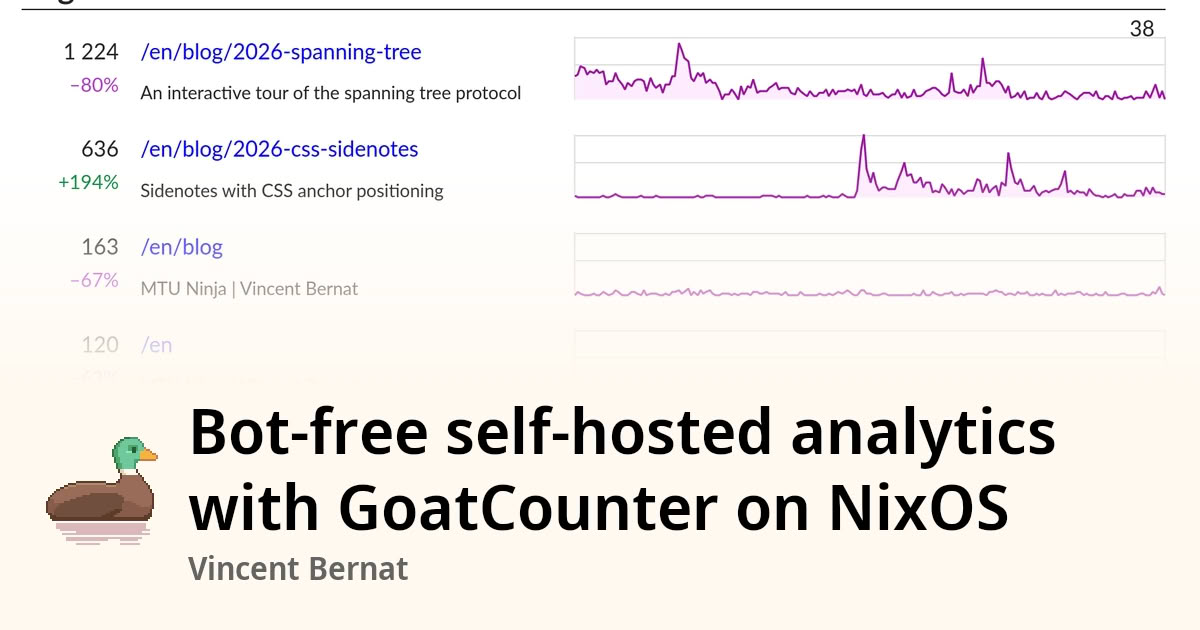
GoatCounter: about 2% of visitors are recorded only after touch, mouse, keyboard, or pointer events. For five web servers, that keeps analytics self-hosted while trimming bot noise from daily dashboards and reducing the JavaScript footprint on every page.
Filtered out9 links
These scored below 40% relevance, so they were left out of the digest.
- Using non-breakable spaces in test method namesmnapoli.fr · 30%
- Wi-Fi PCAP with mac OS(2025)mrncciew.com · 24%
- Vim's UserGettingBored autocmdevanhahn.com · 20%
- Bill to Ban Private Equity from Owning Medical Practicestruthout.org · 18%
- Spain Orders Blocks on Archive.today and Its Mirrorsreclaimthenet.org · 18%
- Singapore’s National Library Board offers micropayments to build reading habitsgadgetreview.com · 14%
- HEIF Heistheif-heist.com · 14%
- Sherline Tools Is Going Out of Businesstoolguyd.com · 8%
- US Revokes Limits on Power Plants' Climate Pollutiontext.hrw.org · 5%
Generated by Clio Analyst