Software factories turn AI intent into deterministic automation. Labs may not know how their own systems work. Product people feel bad because they cannot keep up. The method tries to make AI production more reliable.
Dexter Horthy argues that modern software factories suffer from inefficient manual processes like code review and PR bottlenecks. His company creates multi-agent coding workspaces to automate these tasks and make agentic coding easier. By replacing human effort with AI agents, the goal is to increase developer productivity and reduce burnout. Evidence includes his comparison of traditional versus agentic workflows and calls to abandon manual review. Result: A push toward fully automated software factories using AI agents.
Version 1.3 of the skills repo adds three new skills—/implement-spec, /pr, and /retro. The /implement-spec skill automates execution of a task graph by orchestrating sub‑agents that implement individual tickets in parallel, create an integration branch, merge, and open a PR. The /pr skill provides a template with visual diagrams and pseudo‑code to simplify PR review. These additions let users run large specifications without manual loops and make PRs easier to review.
The article argues that design systems are changing because AI agents are becoming new consumers. The evidence includes Unily building the complex Resin design system and rethinking it for AI. The result is that design systems must add context, knowledge, and skills for agents, shifting toward reasoning systems.
Zach Lloyd says software engineering will become factory‑style, agent‑driven development. He cites Warp’s open‑source platform with 800,000 developers, 60,000 GitHub stars, and an automated loop that triages ideas, writes specs, implements, reviews, and monitors code. As a result, engineers will manage automated factories instead of writing code directly, enabling faster, scalable software creation.
Building a software factory automates the full development lifecycle with autonomous agents. Engineers spend most time on coordination, testing, and iteration rather than coding. An automatic model routing tool selects the cheapest suitable model and can switch providers, reducing token costs by about 25%. This independence lets teams use existing tools and run agents for long periods without human intervention.
Matt Pocock explains how to relieve the pull‑request bottleneck caused by AI‑generated code. He proposes a three‑layer "brake" system—deterministic automated checks, agent‑based automated review, and finally human review—to catch bad code before it reaches people. By improving the first two layers, human reviewers can work faster and avoid being overwhelmed by low‑quality PRs.
The article argues that nations are in a race to build the most powerful AI. It explains that AI works by receiving large amounts of data and learning to predict the next word, image, or code by adjusting internal parameters when its predictions are wrong, even though it does not truly understand the content. The competition drives countries to pour ever‑more computing power into AI development despite limited comprehension of how the technology functions.
Types AI released Jev, a classifier for fast decision engines. It is not a traditional LLM. The article reports that Jev runs 20 to 200 times faster and costs 40 to 400 times less than traditional LLMs. Developers feed Jev state and fixed questions, then branch on its typed probabilities with code.
OpenAI launched web MCP in the ChatGPT desktop app to bridge website interactions with AI agents. The tool surfaces website tools like creating, updating, and duplicating objects to AI agents. This enables users to click on sites and collaborate with agents, enhancing usability for tasks like video editing and recipe management.
Patrick Debois argues that the main barrier to adopting autonomous coding agents is organizational readiness and team dynamics, not the technology itself. He points to historical resistance to continuous delivery in 2009 and current developer pushback against being reduced to prompt-writers instead of engineers. To scale agents, organizations must shift developers from fixing agent-generated code to building the underlying systems, harnesses, and context, which re-engages engineers and minimizes human touches.
Enterprise tech stacks struggle to support AI agents despite successful proof-of-concept builds. Stakeholders demand audit trails, secure data handling, and human approval before deployment. Productionization reveals hidden complexity beyond initial development.
Uncle Bob Martin discusses how AI agents like Grock affect software development, noting that while they generate code quickly, they can make developers slower. He highlights the importance of clean code and references his influential book. His experience shows AI introduces new challenges despite initial excitement.
Ex‑NASA engineer Dexter explains an agentic engineering workflow that replaces manual code review with AI‑driven pull requests and automated trust building. He argues that benchmarks poorly reflect real‑world agent capability, so developers rely on program design and multi‑model verification. By using tools such as GLM 5.2 and Codex/Opus, teams achieve faster releases while reducing human oversight.
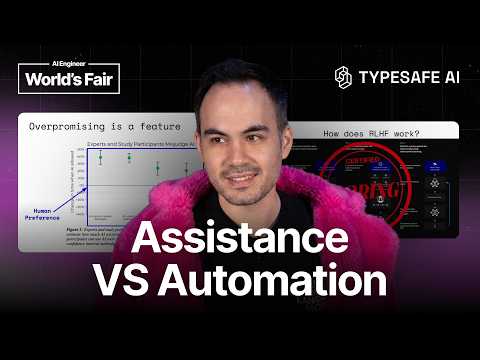
Tiago Almeida argues that today's AI is still in the ChatGPT era. He cites strong benchmark performance but weak real-world automation. He says RLHF-based systems work best when a human is in the loop. The result is that businesses should avoid high-stakes AI decisions.
The article explains what open-weight AI models are, how they are created, and addresses concerns regarding Chinese AI models. It defines AI models as standalone files of numbers trained on vast internet data to predict the next word. It highlights major US and Chinese AI labs and explains the process of model distillation, where outputs from one model are used to fine-tune another. The goal is to help non-technical readers understand the technology, its risks, and the trust issues surrounding international AI models.
AI agents cannot replace human taste in coding. When given minimal instructions, these agents produce generic, middle-of-the-road code. Evidence shows that without explicit human preference input, agents default to the path of least resistance. As a result, software engineers must continue providing taste and architectural direction to ensure quality outcomes.
Harness engineering alone cannot prevent software factory failures with AI coding agents. Declining code review quality and rising bugs indicate the problem is deeper. The root cause is a model training issue, not insufficient tooling or skill. Therefore, the software factory harness is not enough.
AI boosts developer productivity when teams adopt structured practices, yet most reject 70% of its suggestions. Top teams achieve 100-150% gains by redesigning workflows around AI, while basic automation yields 16-30% productivity improvements. Successful strategies combine workflow automation, early design collaboration, focused deep work, reduced context switching, and talent development.
Large language models suffer from attention degradation as context windows grow, creating a 'dumb zone' of poor performance. This degradation happens because the number of attention relationships between tokens increases dramatically with larger contexts. As a result, models generate more hallucinations, retrieve information poorly, and write lower-quality code in the dumb zone. To avoid this, users should break tasks into small chunks in new context windows to stay in the 'smart zone' and get better results with fewer tokens.
Tariq Sha from Sonar explains that AI coding agents are improving rapidly but still produce buggy and insecure code. Benchmark tests show a 50% success rate at 16-18 hours and only 80% accuracy when slowed to 3.5 hours. These findings indicate that without proper verification, AI agents cannot reliably deliver value despite initial productivity gains.
Software fundamentals are more important than ever because AI agents rely on clean code to produce reliable results. Poorly organized code bases cause AI agents to generate garbage outputs and repeat mistakes. Well-designed code with proper testing and modular structure enables effective AI operation.
AI steals opportunities for learning and critical thinking by providing instant answers. A study found students using unguarded AI improved temporarily but performed worse when AI was removed. Relying on AI reduces skill development and creates dependence.
Claude Code's system prompt contains excessive bloat with thousands of unused tokens. The author reduced the prompt from 25K to 8K tokens by disabling multiple tools and features. This optimization improved output quality by reducing distractions for the AI agent.
Vercel Eve is a new AI agent framework. It aims to reduce the manual infrastructure work behind AI agents. The article lists ready-made tools for models, routing, isolated execution, integrations, chat platforms, and scaling. In a demo, the author builds a data analyst agent with Markdown instructions, an agent.ts config, and Markdown skills.
AI eliminates tactical coding tasks, forcing programmers to focus on strategic thinking. The evidence shows that AI handles routine code generation while humans manage long-term planning. As a result, programmers experience mental exhaustion despite performing more meaningful work.
LLMs inherently produce hallucinations because they lack true memory retrieval. Factuality errors occur when agents access information outside their context window. Faithfulness failures arise from attention degradation in long contexts, known as the "dumb zone." To mitigate these issues, users must ensure relevant data is loaded into context and reduce context length when needed.
RAG enables users to search their own documents and receive AI-generated answers. The system retrieves relevant document sections and appends them to prompts before sending them to a Large Language Model. This combination produces natural language responses grounded in actual corporate or personal data.
The author explains that LLMs predict the next token using statistical patterns from massive text data. Earlier chatbots like Eliza and SmarterChild relied on manual rules instead of learning. Modern LLMs represent word relationships mathematically to generate responses. The project demonstrates the complexity behind next-token prediction. Working code illustrates the underlying mechanics.
An LLM handles request-response tasks, whereas an agent wraps this in a loop to control external tools. This loop enables the agent to make decisions and execute actions within its environment. The fundamental distinction is the addition of iteration and tool usage to standard LLM functionality.
Microsoft Research open-sourced Skill Opt, a tool that trains a markdown skill file to improve AI agents without fine-tuning the model or hand-writing prompts. The system uses rollouts, a reflection step, and an optimizer to propose edits to the skill file based on performance data. It achieved top results across multiple models and benchmarks while remaining portable across different AI systems.
The video traces the evolution from prompt engineering to loop engineering. Each layer adds an outer loop to handle longer, more complex tasks. Prompt engineering uses static prompts. Context engineering lets agents autonomously fill context via tools. Harness engineering manages context externally for tasks exceeding 5-10 minutes. Loop engineering adds another external loop to guide the harness and improve human-agent interaction.
AI tokens are expensive because large language models operate as autoregressive systems that generate each token independently without reusing previous context. The tokenization process assigns numerical values to words, punctuation, and symbols, creating a fixed vocabulary of roughly 100,000 tokens per model. Due to this design, users must purchase credits for every token produced, leading to high costs especially for complex tasks like agentic coding.
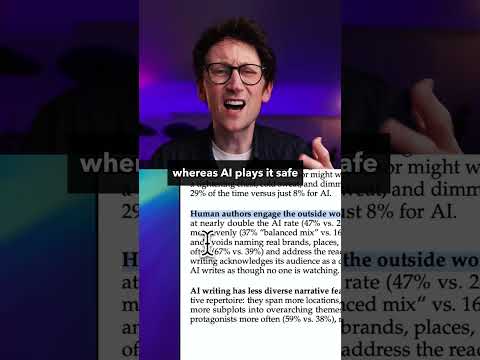
AI writing has a distinctive structural shape that is detectable about 93% of the time. Five AI models cluster together while human stories appear scattered. AI writing avoids tangents and messy details, showing predictable, safe choices. Different models have unique signatures, such as Claude being restrained and GPT being exuberant.
The article introduces a skill checklist to help developers write effective AI agent skills. It identifies four key areas: trigger/invocation, internal structure, steering, and minimalization. The author argues that lacking shared rubrics leads to "skill hell," where agents cannot distinguish good skills from bad ones. Following the checklist enables creation of reliable skills that deliver expected results.
Traditional user interfaces are failing as companies try to replace them with AI agents. While projects like the Humane Pin and Siri failed, tools that empower AI agents to complete tasks are succeeding. Users increasingly adopt command line interfaces and autonomous systems instead of clicking buttons.
Generative AI widens the gap between novice and experienced programmers because beginners often copy code without understanding, developing an illusion of competence. An experiment showed novice students relied on AI autocomplete and produced working code without true comprehension, while experienced students used AI as a supplement and succeeded. The study concludes that foundational experience is necessary to effectively use AI tools in programming.
AI skills are markdown files that provide instructions to language models to improve coding tasks. They can be found on skills.sh and used to enhance code quality. However, users must verify skills for security risks before deployment.
The author introduces the visual-plan skill, which generates rich, visual plans using MDX for Claude Code and Codex. These plans feature interactive diagrams and wireframes that allow users to iterate before agent execution. This method enhances human reasoning and builds greater trust in agent reliability. A related visual recap skill summarizes post-execution results.
Claude Fable 5 generates impressive one-shot UI/UX designs across five diverse tests, including landing pages, 3D galleries, course project hero sections, and modernized websites. The models consistently produce polished, interactive interfaces that rival professional work. Five out of five demos were highly rated as excellent.
The author created a stateful teach skill that personalizes learning by tracking progress and generating tailored lessons. Evidence includes the creation of missions, resources, and HTML-based lessons within the skill. The result is a personalized learning path that adapts to the learner's needs.
Generative AI models like GPT-5.2 and Opus 4.5 enable high-fidelity UI generation, shifting from static to dynamic interfaces. MCP apps support rendering third-party UI within a unified super app environment. This represents a major advancement since ChatGPT's release three years ago.
The article introduces a free CLI tool that performs static analysis to detect and fix common AI-generated code problems like duplicated code, dead code, and unused exports. Evidence includes examples of identical code blocks across file sections and unused function exports within the discussed project. Running the tool automatically suggests corrections and highlights problematic areas for manual review.
Nick Nisi reduced his reliance on single-agent AI by building a custom harness called case that uses a TypeScript state machine to orchestrate multi-agent workflows. This eliminated context-switching overhead and forced agents to provide cryptographic proof of completed work. As a result, he deleted 95% of manual agent setup time and improved reliability.
Grill Me skills help engineers plan by asking targeted questions. A common mistake is trying to answer high-fidelity design questions during grilling, which fails when questions become ungrillable. Users should hand off to prototyping for such cases and keep scope small to avoid the model's dumb zone.
AI coding agents default to producing dense, low-quality code unless explicitly guided. By creating detailed documentation and summarizing it in agent files, users can enforce clear, opinionated standards for better code. This results in more readable and maintainable codebases.
The article outlines the Agent Development Lifecycle (Build, Test, Deploy, Monitor) and introduces Deep Agents as an advanced version. Successful teams ship early and iterate rapidly to create reliable agents. The mechanism involves an LLM running in a loop that calls tools, with Deep Agents adding a sandbox execution environment.
VS Code introduces a new Agents window that lets users manage parallel agents across multiple workspaces and projects from one place. The window displays session lists, allows launching new sessions, and shows real-time status updates. Users can interact with agents, provide feedback via diffs, and run sessions remotely using SSH or dev tunnels. The design emphasizes a streamlined, agent-first workflow with customizable components like the GitHub MCP server.
Mission is a multi-agent architecture that combines delegation, creator-verifier, broadcast, and negotiation into a single workflow. It uses a three-role design with orchestrators, workers, and validators to manage long-running tasks. The system employs validation contracts to ensure end-to-end correctness before and during execution. This approach enables agent teams to complete complex work orders of magnitude harder than single agents alone.
The author built Sandcastle, a TypeScript library that runs AI coding agents in isolated Docker sandboxes. It integrates GitHub issues as a task queue, enabling parallel agent execution while handling permissions securely. The system was successfully set up in a repository and an agent processed a GitHub issue to demonstrate functionality.
AI accelerates software entropy, causing codebases to degrade rapidly. Using deep modules with simple interfaces and defined seams rescues damaged codebases. This approach localizes changes and enables easy testing via adapters.
Matt Pocock explains that LLMs function optimally in a "smart zone" limited to approximately 100K tokens, after which they degrade into a "dumb zone". To manage large tasks, he advocates breaking them into small phases that remain within the smart zone. This approach prevents the AI from becoming ineffective due to excessive context accumulation.
AI coding reduces team understanding and creates hidden technical debt. Evidence includes rising code churn, widespread security flaws, and decreased senior developer productivity. The result is a compromised codebase where engineers cannot maintain what they created.
Software engineering is changing because AI agents can generate code autonomously. In the last six months, models like GPT‑5.2 have become capable of doing the full job of a software engineer, and each engineer now has access to the equivalent of thousands of human developers' compute 24/7. As a result, code is abundant and free, so the bottleneck shifts to system design, delegation, and managing human attention.
Gemma 4 is a 2-billion-parameter AI model that runs on Raspberry Pi hardware. It supports vision, audio, and text in over 140 languages with large context windows. All variants are open-source under Apache 2.0 and enable local, private deployment. The model achieves top rankings on AI benchmarks while requiring minimal resources.
The article shows that the RPI methodology often yields inefficient results. Vague research plans cause extra rework and broken code. Reviewing generated code and keeping plans factual improves outcomes.
AI models evolve rapidly compared to JavaScript frameworks. The creator set up six Opus 4.5 instances and noted that Opus 4.6 disrupted the landscape within two days. This demonstrates that AI development outpaces traditional software updates.
Anthropic replaced agent-building with agent skills—folders of code and documentation that give agents domain expertise. This approach lets humans retain specialized knowledge while providing universal, composable skills to models. Since launching five weeks ago, thousands of skills have been created across foundations, partners, and enterprises.
The article presents context engineering techniques to improve AI performance in complex codebases. A survey of 100,000 developers revealed frequent rework in brownfield code. By implementing intentional compaction to reduce context window size, the team achieved 2 to 3x more throughput. This approach optimizes context for accuracy and speed.
The context window limits the total tokens an LLM can process, causing errors if exceeded. Larger windows increase 'lost-in-the-middle' issues where the model ignores earlier details. Thus, limiting context size improves performance.
 Watch on YouTube