Daily Digest — 2026-09-10
Jump to a section
Signals
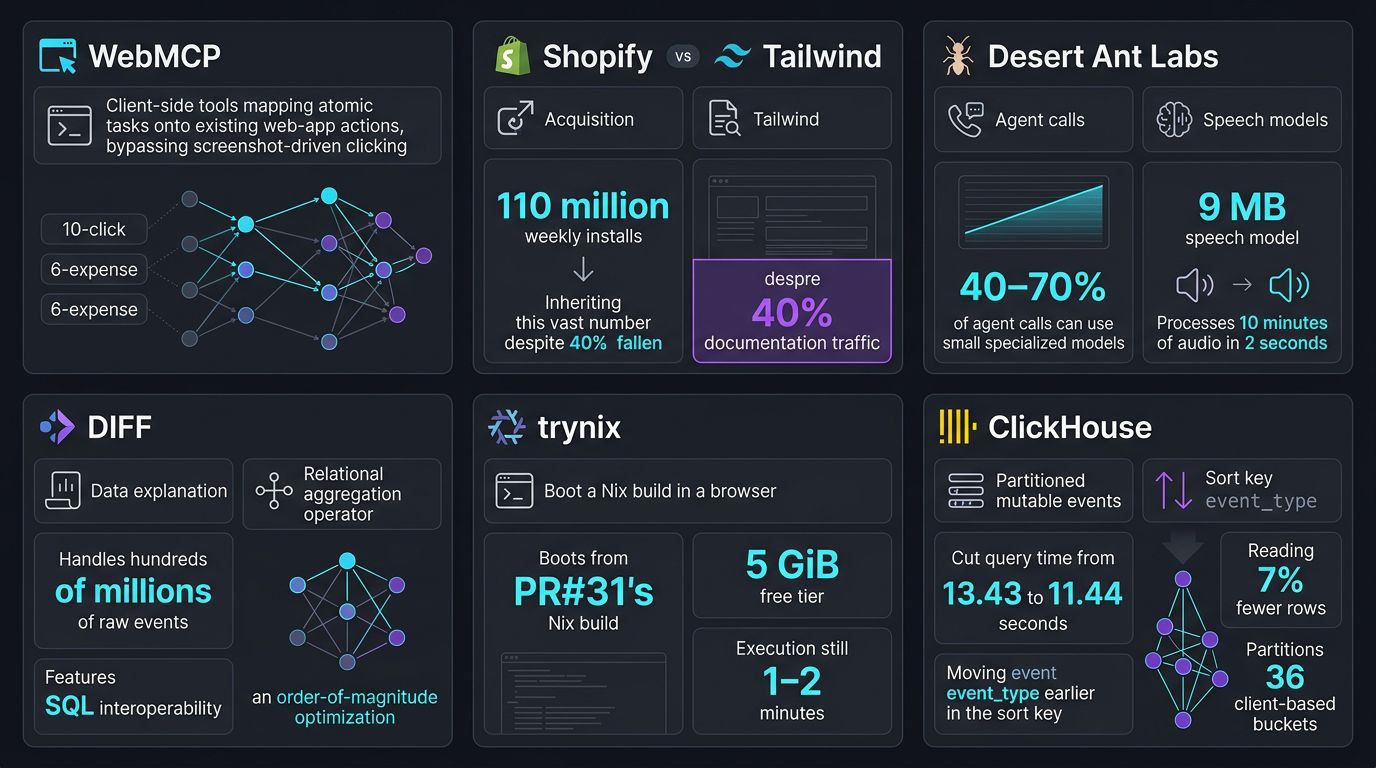
- WebMCP exposes client-side tools that map atomic tasks onto existing web-app actions, bypassing screenshot-driven clicking in a ten-click, six-expense example; AI workflow designers.
- Shopify acquired Tailwind and kept it open source, inheriting 110 million weekly installs while documentation traffic had fallen about 40%; design-system stewards.
- Desert Ant Labs reports that 40–70% of agent calls can use small specialized models, while its 9 MB speech model processes 10 minutes of audio in 2 seconds; AI product architects.
- DIFF turns data explanation into a relational aggregation operator, handling hundreds of millions of raw events while enabling SQL interoperability and up to an order-of-magnitude optimization; data-platform teams.
- trynix boots PR#31’s Nix build in a browser from a 5 GiB free tier, but execution still takes 1–2 minutes; CI reviewers.
- ClickHouse team partitioned mutable events across 36 client-based buckets and moved event_type earlier in the sort key, cutting query time from 13.43 to 11.44 seconds and reading 7% fewer rows; data-platform teams.
Themes
AI-native interfaces and malleable workspaces
Across agents, data tools, and local-first workspaces, interfaces are becoming intent-aware surfaces: instead of clicking through fixed screens, people and systems express goals that engines can transform. The common shift is from UI as a control panel to UI as a malleable contract that different engines can optimize.
- WebMCP is here (and you should care)

WebMCP’s 10-click browser control becomes client-side tools, so agents can act through real app semantics instead of brittle screenshots. - The Death Of The Button: Why The Best Interface Is No Interface

Intent-driven tools’ 10-click process becomes background work, so UX shifts from polishing controls to guiding agents. - DIFF: A Relational Interface for Large-Scale Data Explanation
DIFF turns dozens of high-cardinality columns into relational explanation, so SQL engines can optimize data narratives inside query plans. - Patchwork-26: A malleable, collaborative, local-first workspace

Patchwork-26’s local-first, malleable workspace adapts to users instead of locking them into fixed workflows.
AI coding and software delivery
As coding agents move from patches to playable systems, the bottleneck is less generation than verification, orchestration, and taste.
- Better AI code comment detector
77% balanced accuracy on cross-validation, then 88% accuracy on a small manual real-world test. The detector matters because comment provenance affects audit trails, dataset hygiene, and AI-generated-code reviews. - Review a pull request by booting it
PR#31 puts a 5GiB free tier around trynix, which boots cached Nix builds in a browser. Reviewers get executable validation without building or caching, but large binaries may still take 1–2 minutes. - Claude, change the “Add to Cart” button to blue415
1065 points turns a blue button change into an agent workflow audit. The cost signal matters because an AI agent can spend more effort validating a trivial UI fix than fixing it. - 🚨🚨 TheStandup: Casey Judges GUI GUI in TUI. Is this the future?🚨🚨

Apple event starts in 2 minutes, Apple live in 5 minutes, while Casey renders a Go particle engine in a TUI. The orchestration snag matters because Linear does not start the second agent loop when an issue moves to Needs Review. - I built the same game with Astra and Fable 5.1… only one was fun

100,000+ Grace Blackwell GPUs and 400,000 more Grace Blackwell GPUs frame a $100 GPT Pro comparison. The result matters because Astra makes better-looking 3D output, while Fable 5.1 produces the more playable and interesting game.
AI model capability, cost, and economics
AI economics is splitting into two tracks: compress inference onto devices to avoid token bills, and race frontier models where capability gains may undercut pricing. The open question is whether speed, privacy, and lower unit cost can beat headline benchmark supremacy for product teams.
- Desert Ant Labs: local, fast models that run on device93
Desert Ant Labs’ 9MB models process 10 minutes of audio in 2 seconds on-device, turning common API calls into cheaper, private product work. - DeepSeek launching v4.1 flash cheaper and more capable than v4 pro207
DeepSeek V4.1 Flash launches September 10 with $0.003 input-cache-hit pricing, making cache-heavy workloads cheaper for large-scale agents. - GPT-6 Astra, looped transformers, and hidden reasoning131
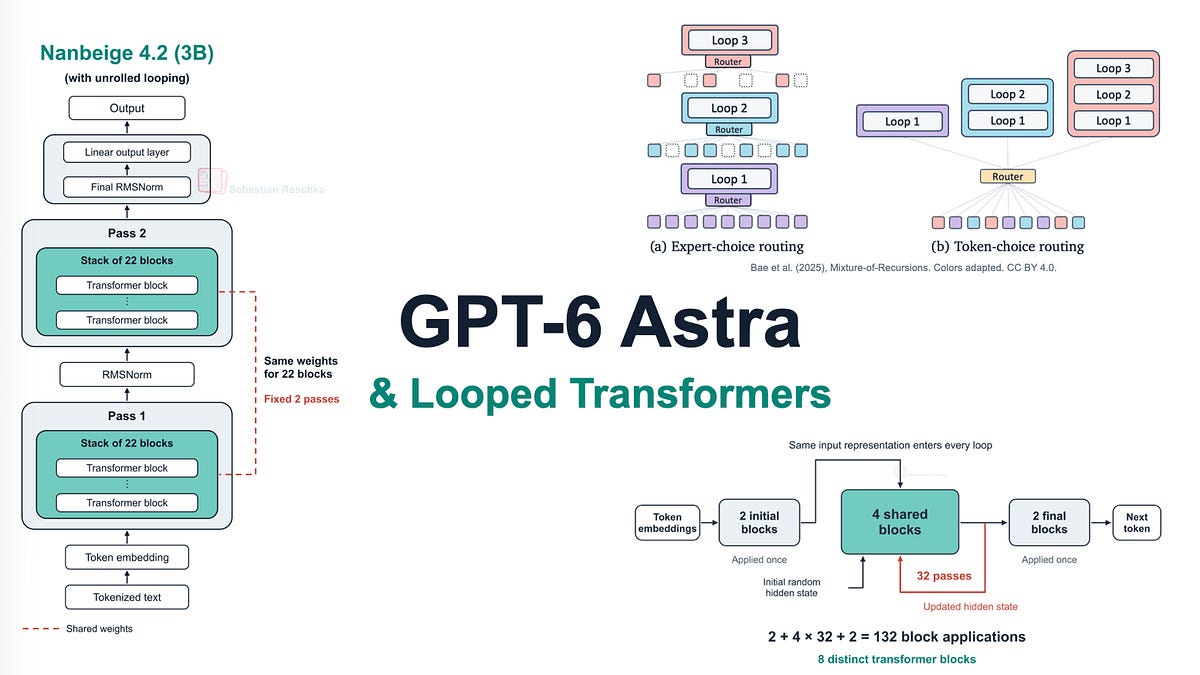
GPT-6 Astra reaches 99.9% on ARC-AGI-3, but coding-agent and general-intelligence gains look less dramatic, challenging benchmark-supremacy claims.
Design systems and browser design tooling
Design systems are becoming a contest between who stewards the open toolkit and how far the browser can carry design logic. The next UI layer may be part marketplace, part native CSS.
- Shopify acquires Tailwind376
Tailwind’s 110 million installs per week now have Shopify as steward, but with 75% of its engineering team gone and docs traffic down about 40%, the open design system’s future is suddenly a business question. - CSS can count now!

CSS sibling indexing: 1, 2, 3, 4, 5 siblings can now drive staggered animation with an index times a delay and a sibling count, shrinking the JavaScript needed for UI choreography.
Software engineering foundations
New CUDA Rust tracks bring flexible GPU kernel authoring, merging low-level SIMT control with higher-level tiling abstractions to accelerate hardware acceleration. The dual paths illustrate how language evolution can reshape performance engineering without sacrificing safety.
- Introducing CUDA Rust: Two Tracks for Writing GPU Kernels

CUDA 1 introduces two tracking paths for GPU kernels. - Efficient and accurate systems for querying unstructured data
Approximate ML-based analytics can be much cheaper while still giving valid answers and useful error detection. - A Design Space Exploration of Async/Await

Async/await is not one uniform model, and small semantic choices can change observable task behavior. - Why Emacs Consult async searches feel slow and how to speed them up
Lowering Consult delays reduces input latency, but it increases background work, CPU activity, and battery use. - Email, decoupled from where and how: A cross-runtime, cross-provider email library for JS & TS
A cross-runtime email library can hide provider and runtime differences behind one transport interface. - The State of Allocators in 2026 - 6 Months Later
Rust custom allocators are much closer to stabilization, but the first version is intentionally limited. - Every Millisecond Counts
For mutable event data in ClickHouse, partitioning for merge parallelism can matter more than time-based partition pruning. - ID design and primary keys
Internal primary keys do not need business meaning, while external IDs should reflect real business needs.
Security and trust
Security tools can fail in surprising places: not only at the algorithm, but at configuration, runtime boundaries, and automated trust decisions. The common thread is that usable security depends on systems making the safe path obvious and reversible.
- Why Johnny Can’t Encrypt: A Usability Evaluation of PGP 5.0 (1999)
PGP 5.0’s 90-minute tests exposed a trust gap: even users willing to encrypt email often couldn’t sign or encrypt successfully. That matters because security features can quietly become unusable behind a friendly interface. - A decade of rustls
rustls 0.24 built on 10 years of work with 43 non-breaking releases, while moving TLS buffering outside the core. That shift matters for teams balancing trust, performance, and flexible TLS integration. - How I advertise malicious software on Google Ads225
RACE’s $500 Google Ads suspension lasted one week, and the appeal argued the flag was a false positive. That matters because automated trust systems can block legitimate developer tools after reviewing websites, DMGs, signatures, JavaScript, and behavior.
People, technology, and society
Technology can either make taste more visible or make it easier to outsource. The tension is whether customization builds agency, while generated work quietly weakens the human habits that keep it maintainable.
- Playing with Emacs
453 words into the Emacs carnival, a >1 YOE author tests whether a text editor can become a music-reactive interface. The payoff matters for people who keep their best tools personal rather than preset. - I Don’t Want to Interact With Stochastic Parrots

AI-generated work and one hidden cost: when generated text becomes the default, human taste and maintainability can disappear. That matters for teams whose documents, code, and products still need owners.
Consumer technology and products
Open-ear audio is getting less open to the world: cheaper models are folding active noise cancellation, adaptive sound, and hands-free AI into everyday earbuds. The consumer takeaway is that premium audio controls are becoming baseline expectations.
- AirPods 5330
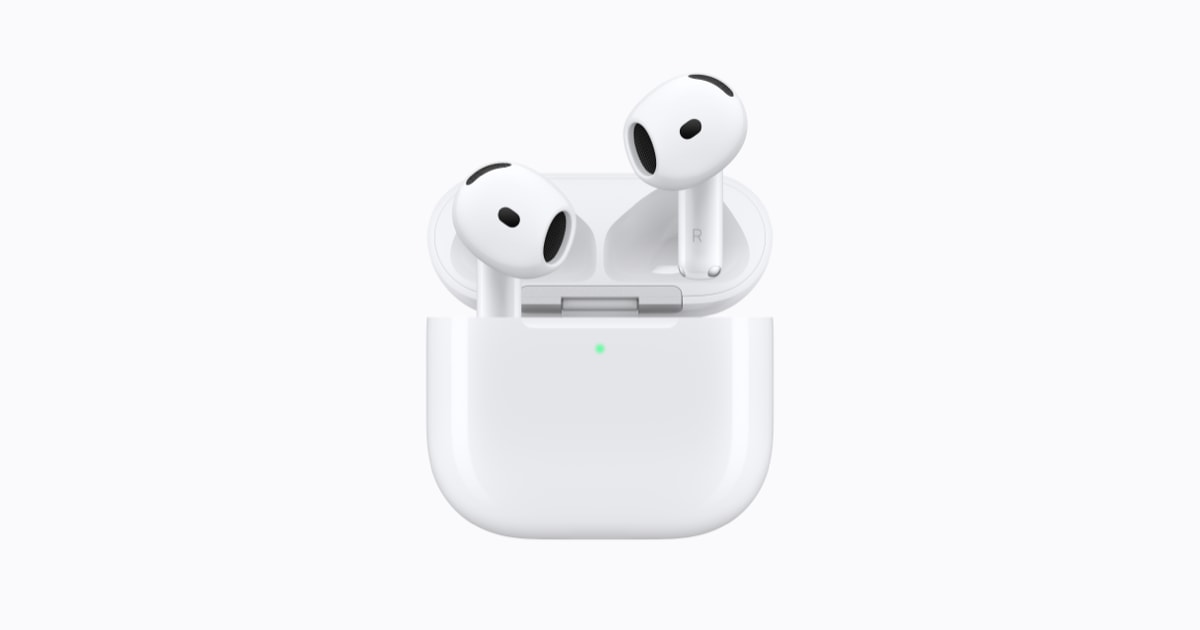
AirPods 5 arrive at $129 and $149 on September 9, 2026, promising up to 50 percent more external noise removal than AirPods 4 with ANC. Open-ear buyers get noise cancellation and AI conversation controls without Apple’s priciest audio tier.
Filtered out12 links
These scored below 40% relevance, so they were left out of the digest.
- Why is this robot slowly dropping the object?youtu.be · 38%
- iPhone Duoapple.com · 36%
- SystemIO conflicts are not firmware bugscodon.org.uk · 35%
- Copyright does more harm than good and should be abolishedgrapheneos.social · 35%
- iPhone Duoapple.com · 34%
- Solaris Turnstilesrdmsr.github.io · 34%
- FreshRSS 1.30.0github.com · 30%
- Analysing 2048 on a 3×3 boardchiark.greenend.org.uk · 30%
- Flock Wants a Closely Surveilled World with No Exitnewyorker.com · 27%
- The purpose of DNS is to spread scamsshkspr.mobi · 25%
- Apple Event for September 9th, 2026apple.com · 22%
- The Best Streameryoutube.com · 20%
Generated by Clio Analyst