Daily Digest — 2026-10-01
Jump to a section
Signals
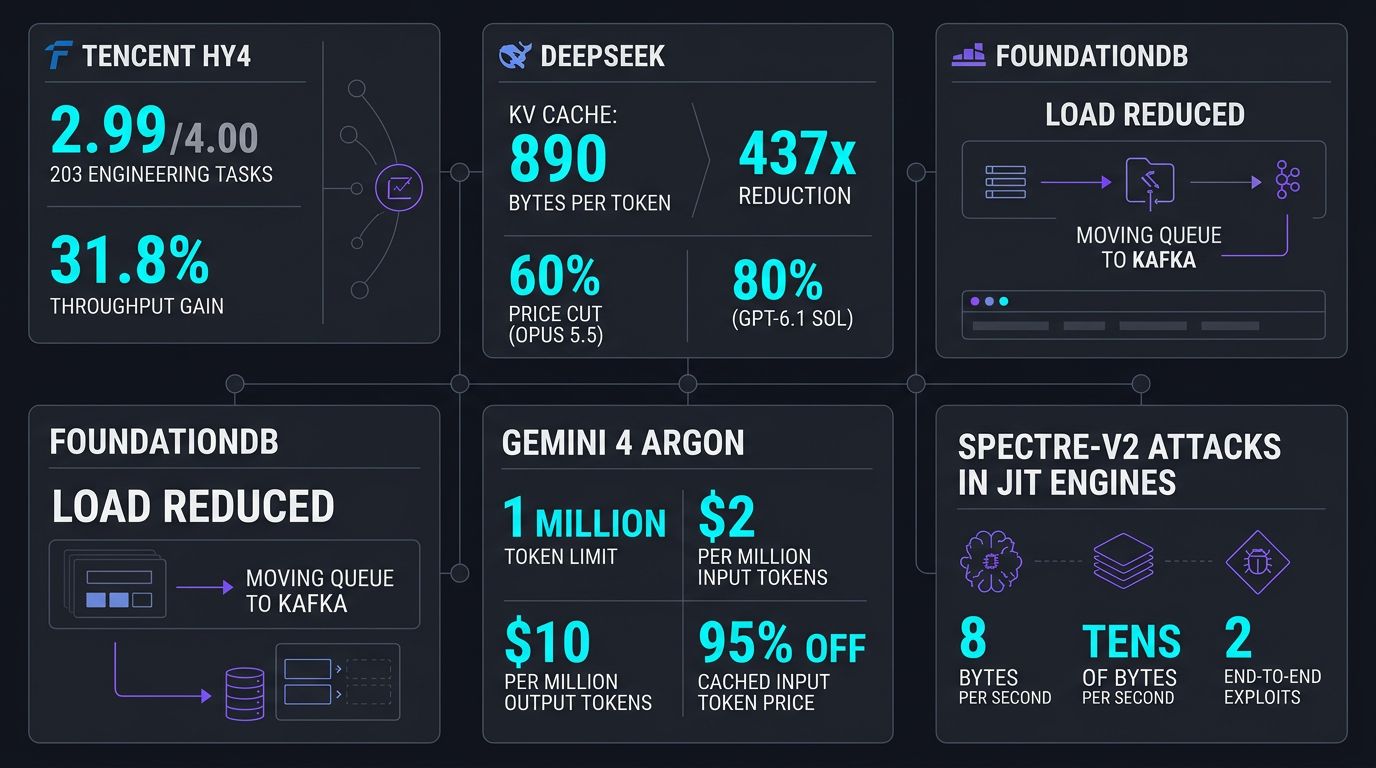
- Tencent Hy4 scored 2.99/4.00 on 203 engineering tasks with a 31.8% throughput gain. Open model users.
- DeepSeek reduced KV cache to 890 bytes per token, 437x reduction, 60% price cut for Opus 5.5, 80% for GPT-6.1 Sol. Western labs adopt.
- FoundationDB load reduced by moving queue to Kafka. 900 million.
- Gemini 4 Argon has 1 million token limit, $2 per million input tokens, $10 per million output tokens, 95% off cached input token price. 1 million token limit.
- Spectre-v2 attacks in JIT engines achieve 8 bytes per second, tens of bytes per second, 2 end-to-end exploits. 8 bytes per second.
Themes
AI Workflows
The AI workflow landscape is evolving with competing strategies: military grade security controls, protocol standardization via MCP, and specialized long-context models. Each promises to enhance agent capabilities while managing risks.
- Did a 50 year old military secret just solve agent prompt injection?

OpenAppa applies a 50 year old military secret to AI agents, resulting in a 75% job completion rate. This security measure is vital for companies protecting sensitive data. - You said no MCP350
Pi integrates MCP with Codemode to ensure 100% tool compatibility across small harnesses. This simplifies integration for developers. - We use MCP wrong

MCP provides 1 focused solution for authentication scoping in AI workflows. This method restricts agent actions more safely than broad CLI logins. - Gemini 4 Argon772

Gemini 4 Argon features a 1 million token context window priced at $2 per million input tokens. This model excels in long-horizon tasks like quantum resource optimization.
AI Cost and Economics
The AI cost battle is shifting from raw compute to clever compression, reshaping who can afford frontier models.
- The AI Race Just Got Awkward418
DeepSeek’s KV cache compression reduces memory to 890 bytes per token. Western labs adopt it to slash inference costs.
Software Development
Software development tools often address isolated issues while neglecting the integrated challenges of maintenance, reliability, and verification that define real-world success.
- Coding is not solved
AI code generators reach 19,000+ subscribers but skip maintenance. Critical for teams facing scalability issues. - Finding Bugs
Comparing two regex crates, this fuzzer detects bugs missed by standard tests. Essential for reliability-focused developers. - What TLA+ can and can’t check
Using three temporal operators, TLA+ verifies safety but not all liveness. Important for formal methods practitioners.

Design Systems and Design Tooling
New design tooling is turning heavyweight frameworks into lean, high-performance experiences across desktop, web, and shader pipelines. The shift lets creators experiment with GPU-driven UIs, Rust-based transpilation, and pure-CSS animations in unified systems.
- I’m Using GPUI For Everything

GPUI 1 renders UI directly on the GPU, eliminating the Chromium engine. Developers care about reduced bundle size and faster startup. - Rust to WGSL transpiler
wgsl-rsreleased
wgsl-rs 1 transpiles Rust into WGSL with precise IR handling. Developers care about reliable shader generation. - CSS animations to bring your site to life

details 1 expands content by animating height from 0 to auto. Designers care about lightweight animation without JavaScript. - Qt 6.12 LTS Released
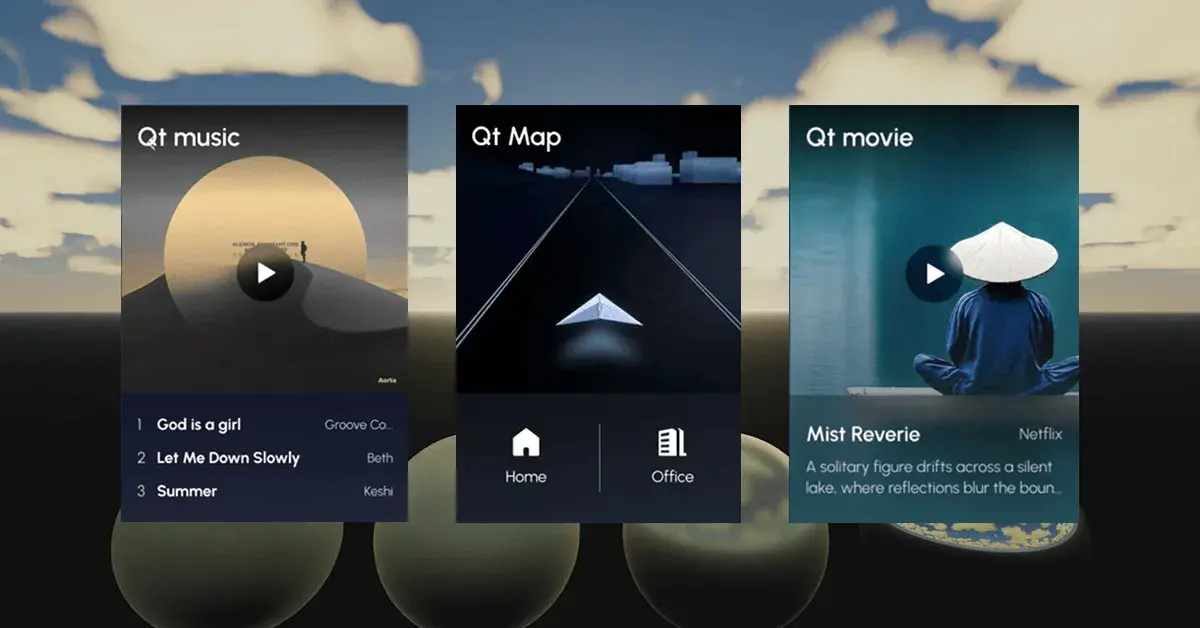
Qt 6.12 adds hot reload for QML. Developers care about secure high-performance UI toolkits.
Infrastructure and Operations
Shifting critical logic from centralized services to decentralized, client‑side or immutable components is reshaping reliability and scalability across diverse systems. These changes cut operational load, shrink attack surfaces, and unlock massive scale without sacrificing control.
- We used a database as a message queue. Now we use Kafka
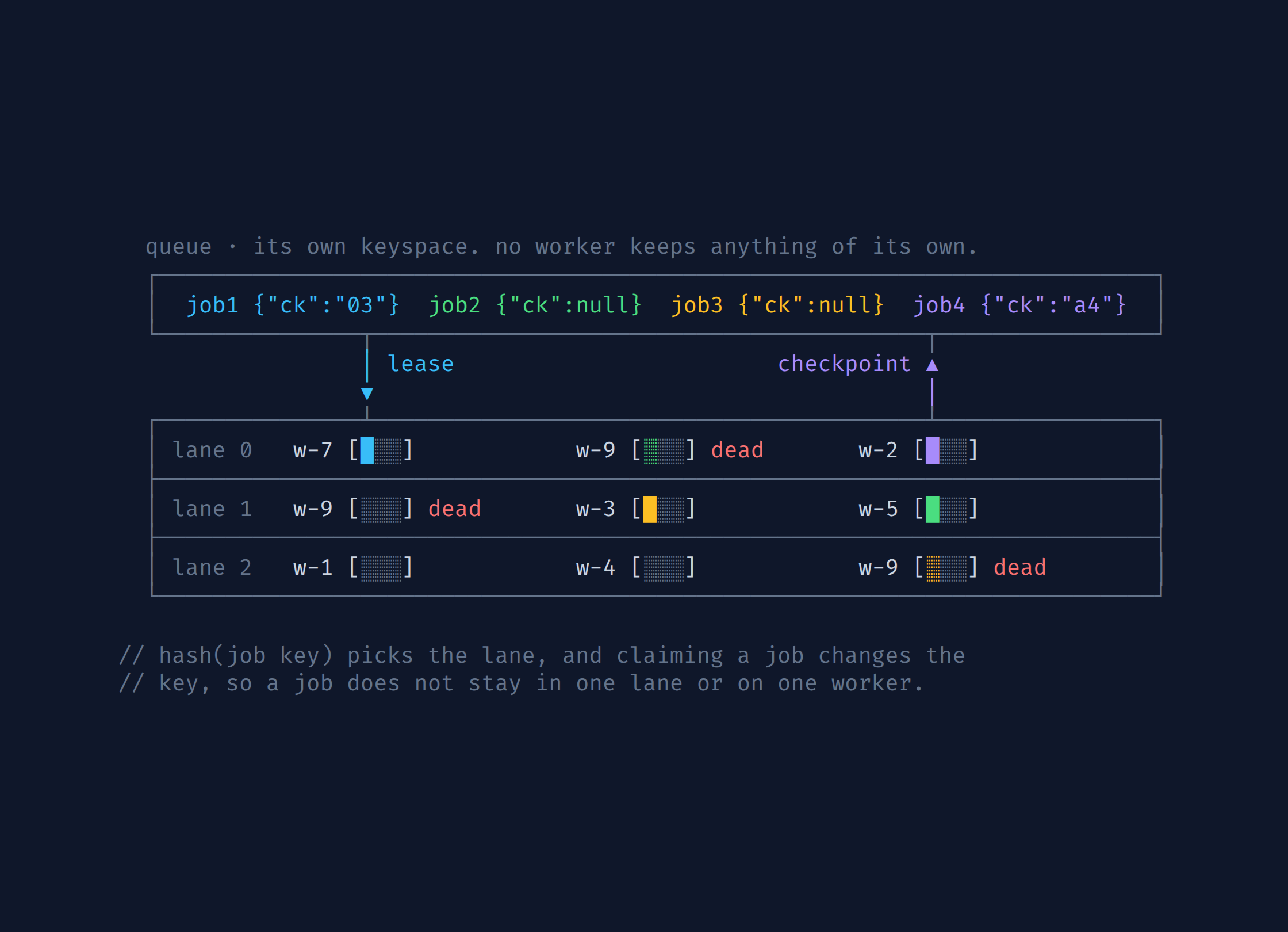
FoundationDB 900 million users, Kafka reduced load and improved reliability. - Hanami, Why?: Introductions
Hanami 4 modules, modular architecture supports scalable, testable backends for diverse services. - Dumb Servers, Smart Clients: Distributing Images with Quarry
Quarry static blobs, clients verify signatures and stage updates securely. - snowdesktop: Immutable Debian desktop for developers
Snowdesktop immutable desktop, community forks keep it alive after archive. - Join Ordering, Part 1: The Shape of the Search Space
Join ordering DP, optimal orders efficiently cut execution time 100×.
Security, Privacy, and Society
The convergence of AI-driven data extraction, hardware-based attacks, and privacy-focused backups reveals a critical juncture in how we balance technological advancement with security and societal trust.
- Why Is Sam Altman a Free Man?223

AI models scraped millions of stories from 11 publishers, leading to tens of thousands of incidents. This matters for data privacy and AI accountability. - Branch Target Reuse: Spectre-v2 Attacks in JIT Engines
Spectre-v2 exploits in JIT engines enable arbitrary code execution, leaking data at 8 bytes per second. Critical for developers and system administrators. - Back to Backups: A Year in Review

The new backup features allow users to store up to 100 GB of data, with messages kept safe for 45 days and media offloaded to thumbnails. This is important for ensuring privacy across devices. - OpenBSD’s ports tree keeps GPL coreutils and rejects uutils (Rust rewrite)
OpenBSD made one decision to reject the uutils Rust rewrite, maintaining GPL coreutils for consistency. This matters for software development practices.
Filtered out15 links
These scored below 40% relevance, so they were left out of the digest.
- Major rsync upgrade in Debian because of 33 CVEslobste.rs · 30%
- EDG C/C++ Compiler Projectgithub.com · 30%
- Another Look at Provable Securitymath.uwaterloo.ca · 30%
- Turbo Haskellcomonad.com · 30%
- Differences between `foldl` and `foldr`blog.haskell.org · 30%
- attezt: device attestation, PKCS11 and ACMEmedia.ccc.de · 30%
- The Cuckoo's Eggen.wikipedia.org · 30%
- Dirty Optimization Secrets (C for Playdate)devforum.play.date · 30%
- ASM Bots: Core War in real 8086 machine codeasmbots.io · 20%
- Songhive — A fully self-hosted and federated music platformblog.fabiomanganiello.com · 20%
- A no-cost audio upgrade for my workstationmit.teil.space · 20%
- Under Autumn’s Spell (October 2026 Wallpapers Edition)smashingmagazine.com · 10%
- September 2026: The world today, as seen by one Polish guytomwojcik.com · 10%
- 🚨🚨 TheStandup: Dots and dot.com, Muse, Dario, Super Intelligence, ...🚨🚨youtube.com · 0%
- LIVE: Poteto (creator of pstack) on shipping 1,000's of PR's a month at SpaceXyoutube.com · 0%
Generated by Clio Analyst